



Birds and Wildlife at Kingfisher Park Birdwatchers Lodge
Information
Within 1½ km of the Lodge around 230 bird species have been recorded as well as many mammals, reptiles, insects and plants. It is easy just to spend the day walking around the Lodge grounds or just relaxing at your accommodation and waiting for the wildlife to come to you.
Apart from the Buff-breasted Paradise Kingfisher several other sought after species of bird are regularly recorded annually around the Lodge, these include Red-necked Crake, Bush-hen, Double-eyed Fig-Parrot, Lesser Sooty Owl, Papuan Frogmouth, Grey-headed Robin, Little Kingfisher, Great-billed Heron, Black Bittern, Lovely Fairy-Wren, Barred Cuckoo-Shrike, Blue-faced Parrot-Finch, Grey Whistler, Superb Fruit-Dove and Pied Monarch. Other species like Emerald Dove and Noisy Pitta breed in the grounds as do many of the smaller passerine species such as Large-billed Scrubwren, Large-billed and Fairy Gerygone, Macleay's, Yellow-spotted and Graceful Honeyeater, Pale-yellow Robin, Little Shrike-thrush, Yellow-breasted Boatbill, Spectacled Monarch, Cicadabird, Barred Cuckoo-Shrike and Spotted Catbird.
Some of the other wildlife occurring in the Lodge grounds are: White-lipped
Tree-Frog, Major Skink, Boyd's Forest Dragon, Brown and Common Green
Tree-snakes, Australian Scrub Python, Cairns Birdwing Butterfly, Ulysses
Butterfly, Echidna (rare), Platypus, Long-nosed and Northern Brown Bandicoot,
Green Ringtail and Striped Possum, Red-legged Pademelon, Yellow-footed
Antechinus, Agile Wallaby, Spectacled Flying-Fox, Eastern Tube-nosed
Bat, Tree Mouse, White-tailed Rat, and Fawn-footed Melomys. Please refer
to species lists for Frogs, Reptiles,
Mammals,
Butterflies and Moths
which have been recorded at the Lodge, these list are by no means complete
as new species are still being recorded, but they will give you a guide
as to the diversity found within the grounds.
Get a Bird Species List for the Period of your Visit to Kingfisher Park Birdwatchers Lodge
We upload our bird sighting records from the Lodge onto the Eremaea
eBirds website, these records date back to 1994. This can be useful
to you as a means to work out a list of species that have been recorded
at the Lodge at the time you wish to visit. To do this go to the ebird
site Hotspot
list. This will show you a total list of all species seen at the
Lodge, you can narrow this list down to the period you will be visiting
by selecting months and years at the top of the page, you can then see
what has been recorded previously. You can also check the bird species
seen on morning walks by going to the ebird site Hotspot
list. and then following the instructions as detailed for the weekly
lists above.
Birdwatching and Spotlighting Ethics Within Kingfisher Park Birdwatchers Lodge Grounds
We like our guests to have a good experience when visiting the Lodge and at the same time ensure that observation of the wildlife is conducted with minimal impact. We have been associated with the Lodge long enough that we think we have an idea of what upsets and disturbs our wildlife so we have a set of basic rules that we like our guests and visitors to follow when they are in the Lodge grounds. You may not agree with all our policy but, in very basic terms, this is our home so we expect you to respect our point of view.
Bird call playback within the grounds is not permitted as this can distress the species whose call is being played and in the case of predators (i.e. owls or raptors) can upset other wildlife nearby. With playback now so easily accessible on mobile phones, sadly we come across a lot of people who do not understand its effect on birds.
The Lodge is a small isolated patch of rainforest and since territories are at a premium, playback has the potential to disturb and confuse the birds, taking them away from their normal routine. The Lodge is also an area of high visitation. This has allowed many birds to become less wary of people and most can be seen by being patient and using your birding skills. We can point out the most likely places to see certain species. If you want to read a very balanced view of using call back we suggest you read David Sibley's The Proper use of Playback in Birding .
Bird photography is an increasing part of birdwatching and the wellbeing of the animal being photographed must always come first. This is especially true of birds at or on nests. Please don't stay long or use high-powered flash guns around nest sites or interfere with the vegetation around nests as a way to get a better image, as this type of disturbance may cause the bird to abandon the nest. We do want you to go home with some memorable images and this can be achieved by again being patient.
Spotlighting can be interesting and fun, but again it can have an impact on the animals. The use of high-powered spotlights is not allowed around the Lodge grounds as these can disturb sleeping birds and dazzle nocturnal species, temporarily impairing their vision. If you want to spotlight, we recommend a torch or headlamp with adjustable light settings and a red filter. Many creatures will flee from a white light but not from a red one. If your light does not come with a red setting, red cellophane can be used to create one. We usually have some in Reception, so please ask us. For best results finding animals, keep the light close to your eyes, as any eyes the light hits will reflect the light back to the torch and you want to be able to see that eyeshine. The reflected colour varies with different creatures. The use of flashguns with powerful light magnifiers (eg. Better Beamers) is not allowed. Should you plan to spotlight away from the lodge, please ask for directions to places that are not in populated areas, to avoid unpleasantness with the locals.
Please do not put out food for the birds, or at least ask before you do. We do have a few bird feeders around the accommodation area and these are used by birds when their natural food source is hard to find. They do not come to the feeders all year around: if there is natural food available that is where they will be found.
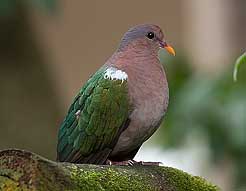
Emerald Dove
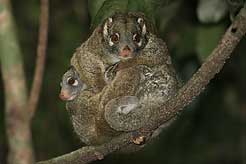
Green Ringtail Possum with baby
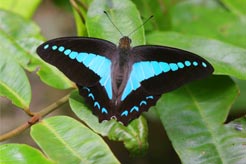
Blue Triangle
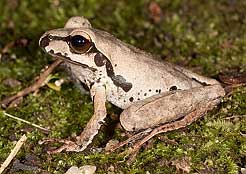
Jungguy Frog - Litoria jungguy
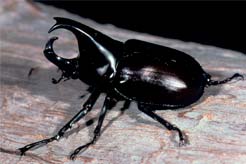 Rhinoceros Beetle